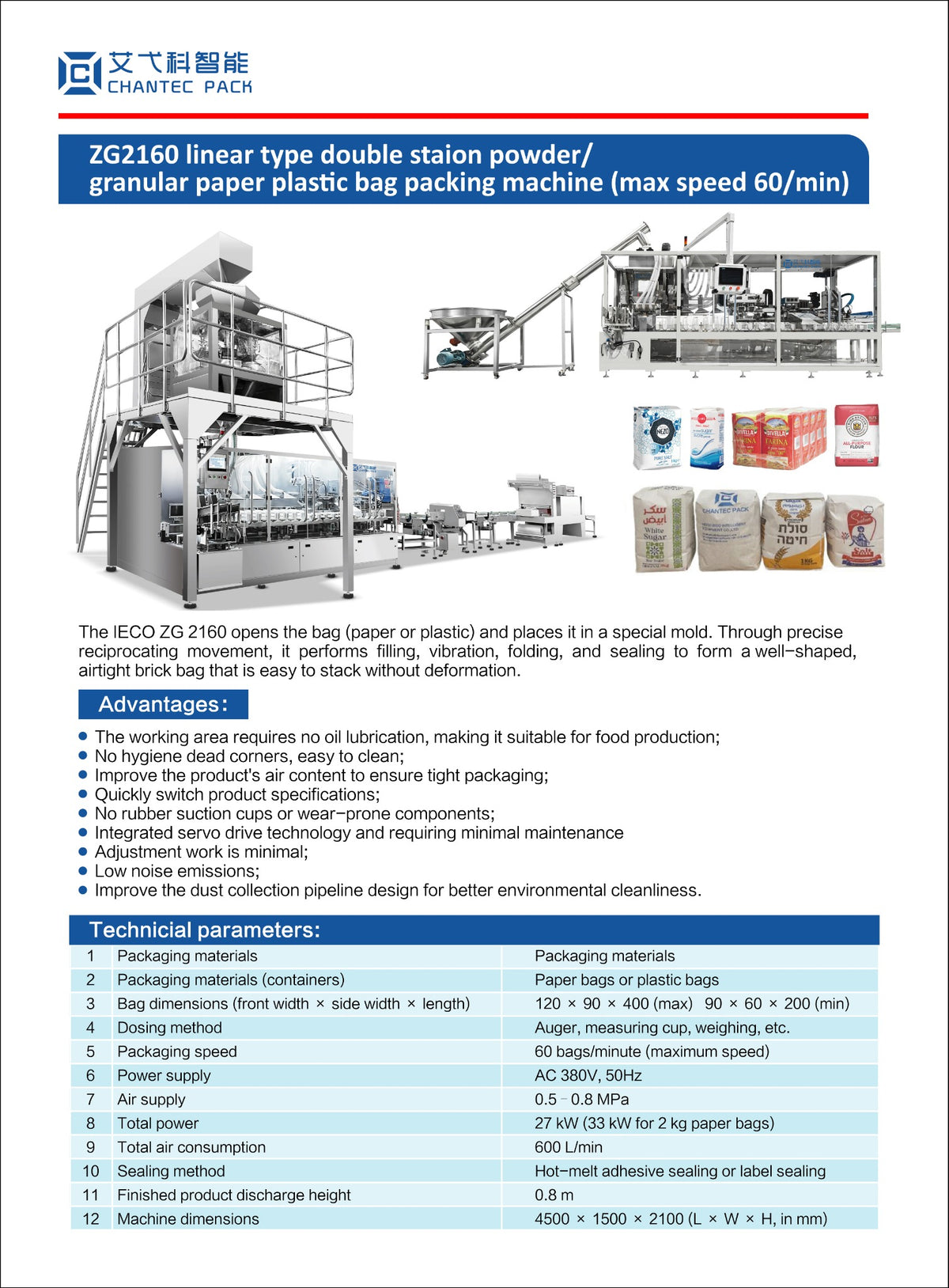
FOR SALT REFINERS AND RETAIL SALT BRANDS
Salt packaging for fine grains and coarse crystals
Fine table salt, coarse crystals and powder-like salt blends place different demands on feeding. We select the dosing system first, then match contact materials, moisture protection and the retail package.

Which salt will the line handle?
Select the closest grade. The names are a starting point; particle distribution, moisture and additives still need to be checked.
Fine salt can still be a free-flowing granule
For suitable free-flowing fine salt, assess cup dosing or linear weighing with the required weight control. Do not choose an auger simply because the crystals are small. Review bulk-density variation when considering a volumetric cup.
Film bagging for suitable salt granules Discuss this configuration
Let particle size guide the feeder and transfer
Assess linear or combination weighing for suitable coarse crystals. Review the largest particles, feeder opening, drop height and required condition after packing. Moist lumps need their own handling review.
Explore combination weighing Discuss this configuration
A powder-like grade needs a separate dosing trial
For very fine or blended products, assess an auger arrangement against flow, additives and the target dose. Confirm salt compatibility and contact materials; a general-purpose powder filler is not automatically a salt specification.
Discuss a powder-filling arrangement Discuss this configuration
Specify the machine for salt service
Contact materials and exposed parts
Salt exposure, humidity and cleaning chemicals influence material selection. Define contact parts, finishes and surrounding components in the quotation instead of relying on a general stainless-steel description.
Moisture and product flow
Tell us about plant humidity, storage and any tendency to form lumps. Hopper discharge and feeding must be reviewed with the actual grade, rather than expecting the bagger to correct an inconsistent supply.
Cleaning and access
State whether the plant uses dry cleaning or washdown. Access, drainage where applicable and the suitability of electrical and mechanical components belong in that review.
Choose the retail presentation after the dosing route
Heat-sealed film bags
Use compatible roll film on a VFFS platform. Agree the barrier structure and keep salt out of the seal area. Bag appearance alone does not establish moisture protection.
Explore this equipmentPaper bags with a defined barrier
Review the paper structure, liner or coating and top closure together. The folded outer paper and any inner barrier perform different jobs.
Explore this equipment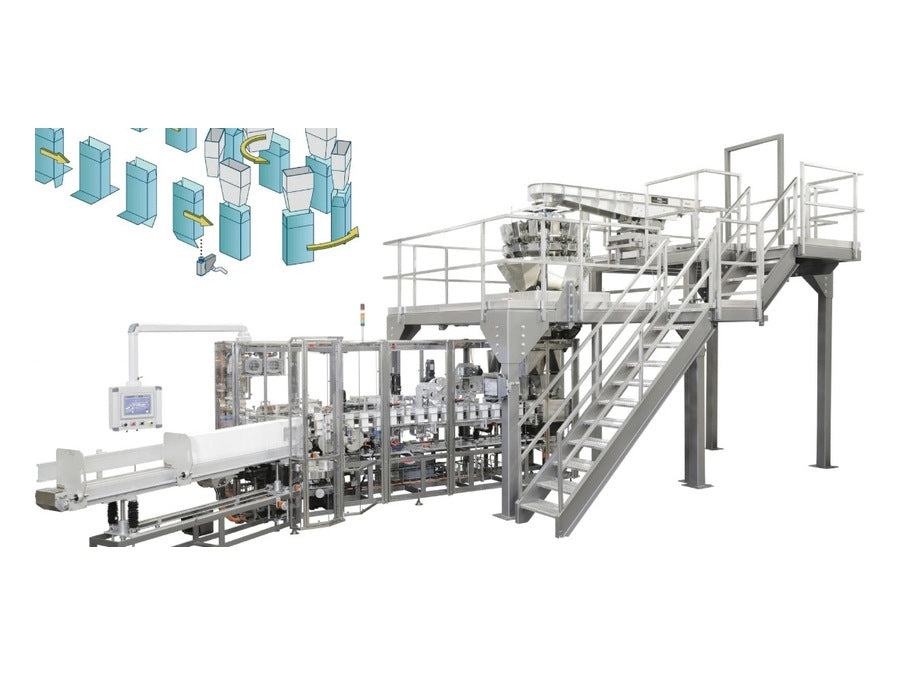
CX-ZH120
Retail cartons for salt
The CX-ZH120 is an intermittent vertical cartoning option for compatible salt cartons, with a catalogue maximum of 40 cartons/min. Dosing, board, carton dimensions and closure are reviewed as one configuration.
Send the carton drawing, including any inner liner, pour opening or insert. These features are packaging requirements to check, not assumed standard modules.
Explore the CX-ZH120 cartoning routeBefore we specify the line
Does stainless steel mean the machine is suitable for my salt?
The grade, finish, product exposure and cleaning conditions must be defined for the project. We confirm the construction scope with those conditions; the words stainless steel alone are not a complete salt-service specification.
Will switching from fine to coarse salt only require a setting change?
The feeder, product passage and weighing arrangement may also change. Send both grades and the changeover frequency so we can assess tooling and cleaning rather than promise one adjustment for every salt.